Skip to content
Industrial gas detection for demanding environments
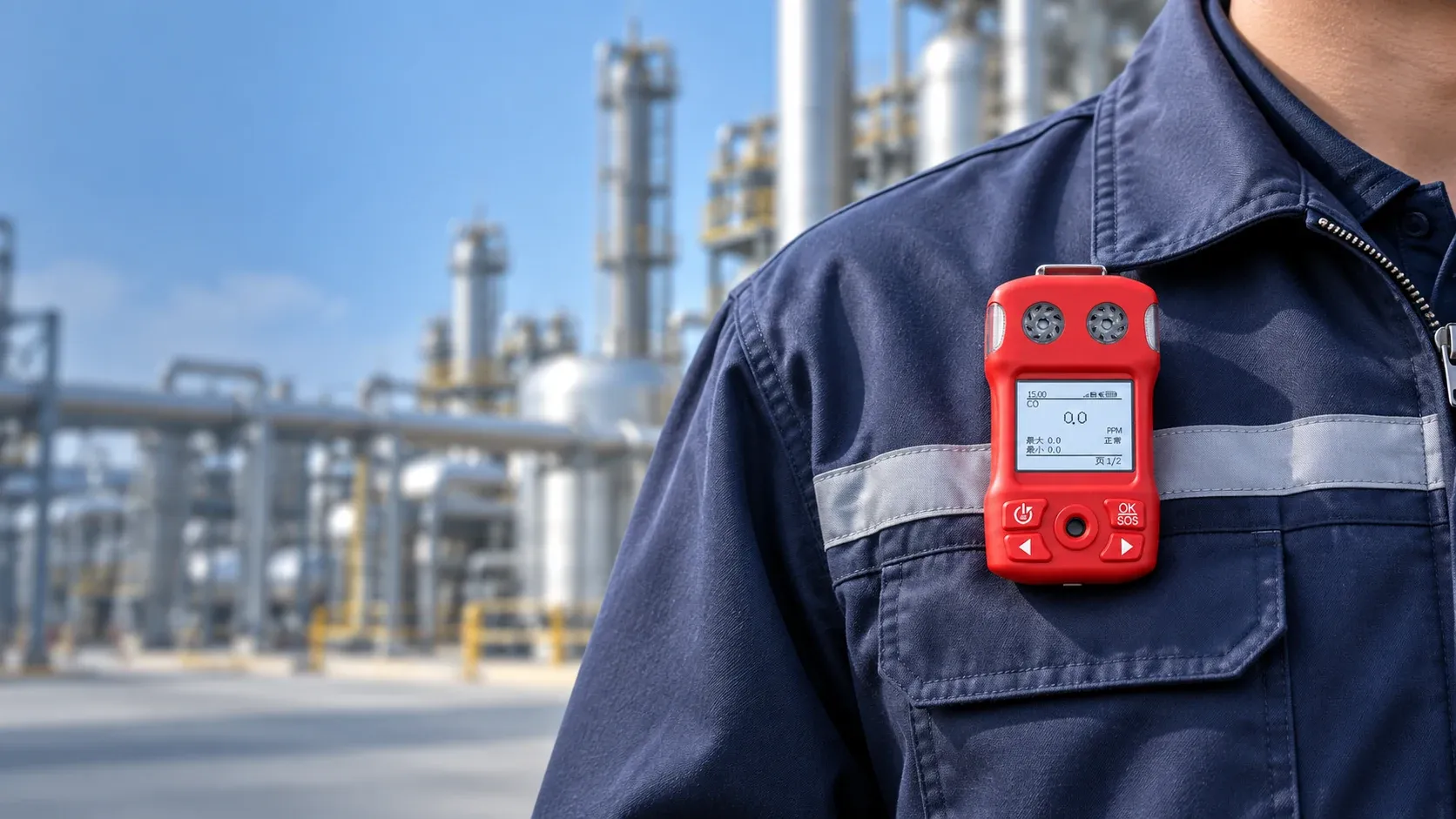
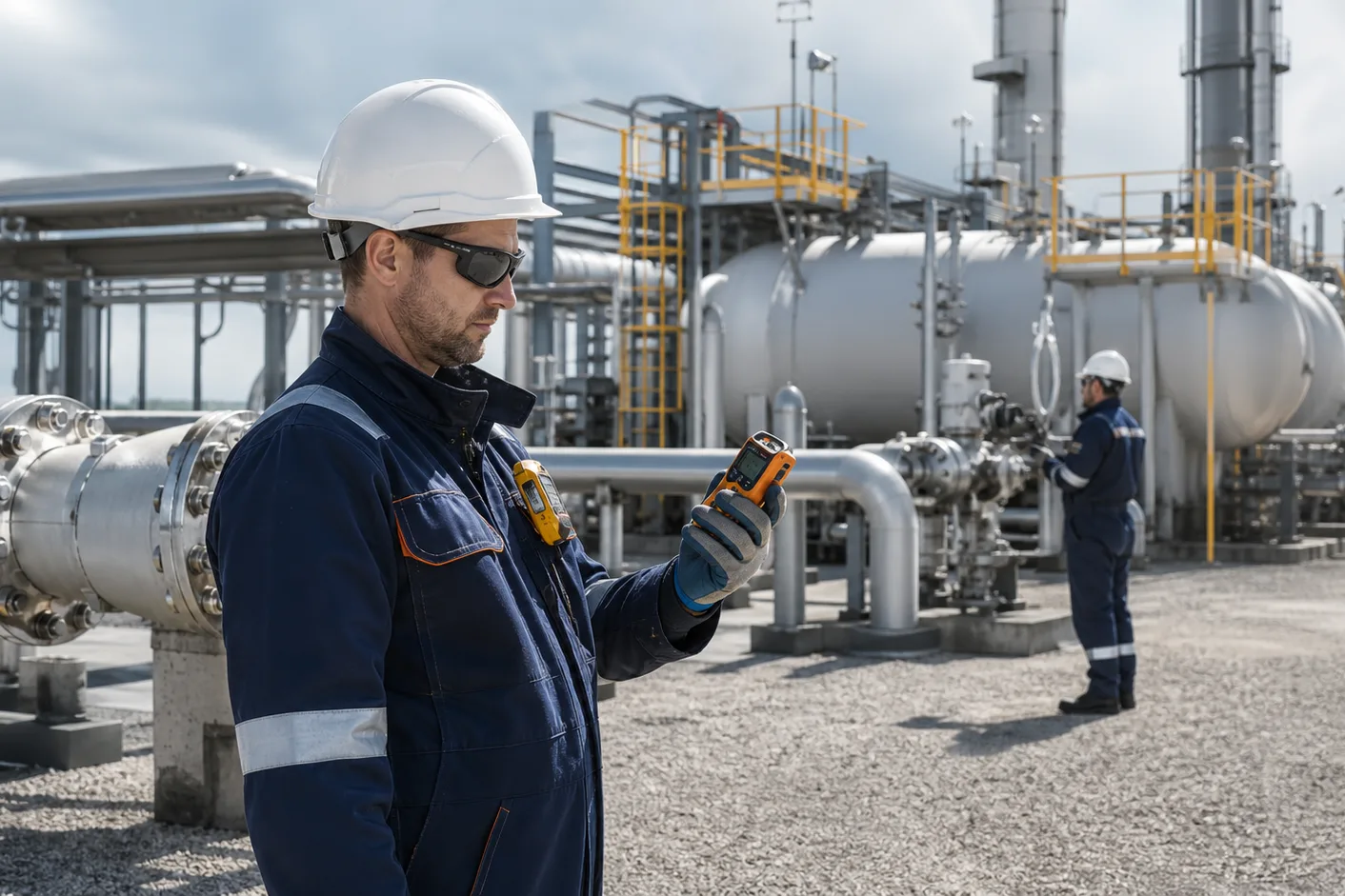
Safety engineer checking a portable gas detector at an oil and gas process facility

Industry

Gas Detection for Oil & Gas Operations

Upstream and midstream oil and gas sites need three different measurements: the air a worker breathes while moving between wellheads, tanks and process equipment; the air at fixed points near likely release sources; and gas drawn from inside a process line or vessel. Each needs its own instrument and sampling arrangement. Eranntex configures portable detectors, fixed detectors and sample-conditioning systems to the gases and measuring ranges a project specifies.

Tank gauging and sampling: why the gas count matters

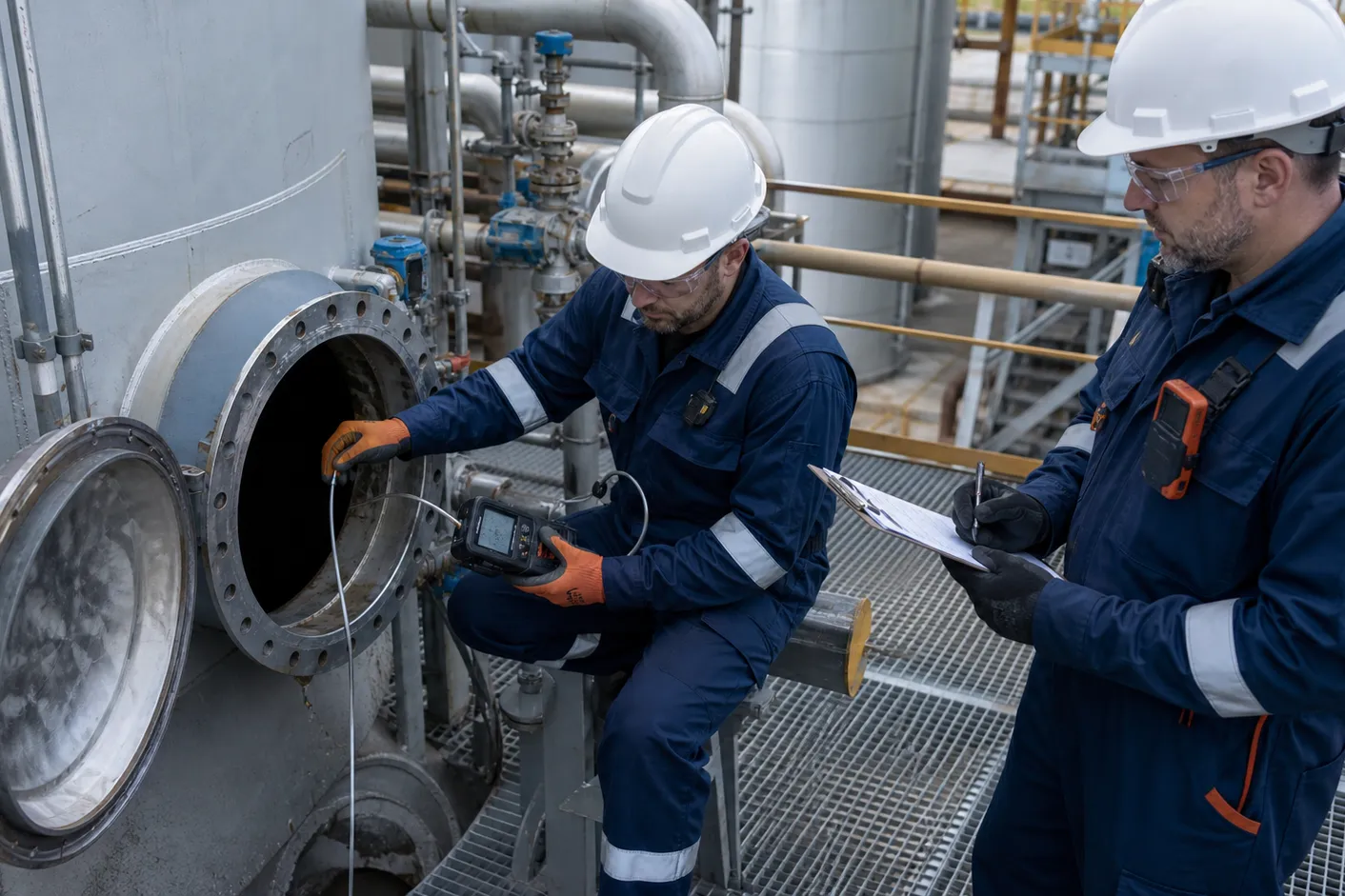
Opening a thief hatch on a production tank can release hydrocarbon gases and vapors that have built up under pressure. NIOSH measured concentrations at open hatches above the lower explosive limit and at levels immediately dangerous to life or health, and describes the result as a highly flammable and oxygen-deficient atmosphere, even where the area is not a confined space. In US surveillance covering 2015–2016, NIOSH counted eight oil and gas worker deaths in eight incidents that met its case definition, among workers transferring fluids, gauging or sampling tanks, or working on top of a tank. Its advice to workers is to wear the required multi-gas monitor and heed its alarms. A monitor that measures H₂S alone gives no warning of hydrocarbon vapor or low oxygen at the hatch.

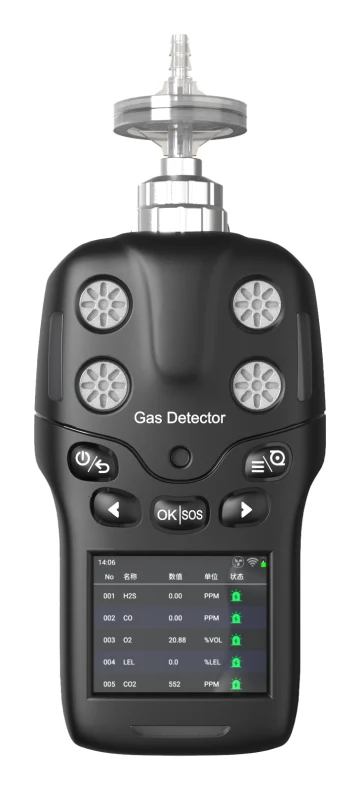
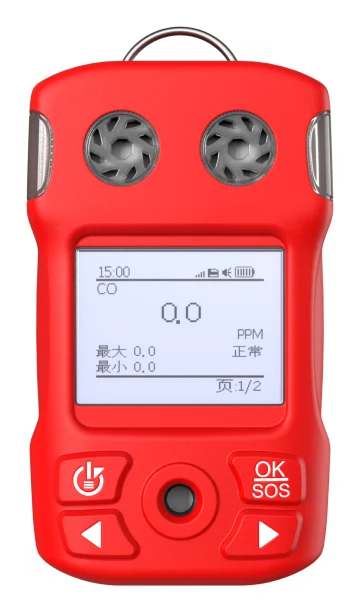
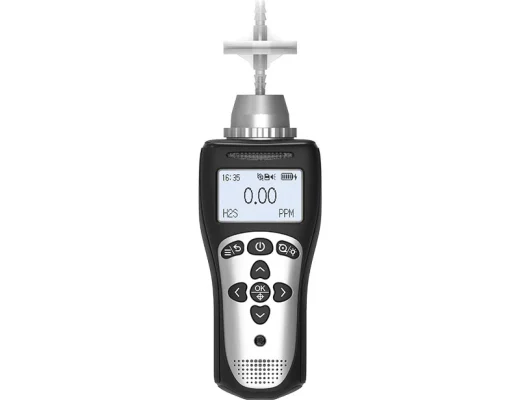
For this work, the number of gases a personal monitor measures at the same time comes before display or logging features. Combustible gas (%LEL) and oxygen are both at issue at an open hatch, and H₂S is added where the produced fluids contain it. The MS104K-S2 is a diffusion monitor for one or two gases, so it fits tasks where two gases cover the hazard assessment. A task that needs %LEL, O₂ and H₂S together calls for a three-gas configuration or more. The MS400-S has standard configurations for one to four gases and expanded configurations for up to six. It has a built-in pump for drawing air through a probe or line, and it can switch to diffusion sampling. The gases and ranges for either model are confirmed for the configuration you order.

Testing a tank, vessel or manhole atmosphere from outside before entry is a separate task, covered in the confined-space entry guide.

Sour gas and high concentrations: specify the sensing principle

A specification that says only "0–100 %LEL" leaves out a choice that matters on sour sites. Catalytic bead sensors can lose sensitivity after exposure to H₂S or silicones. They also need oxygen for the sensing reaction, so their readings are limited in oxygen-deficient air, such as an inerted vessel or a vapor-filled tank hatch. Hydrocarbon infrared sensors do not need oxygen and are not generally affected by catalyst poisoning, but they cannot detect hydrogen. State the background gases and the oxygen conditions expected at the point of measurement, so the sensing principle can be selected for the task.

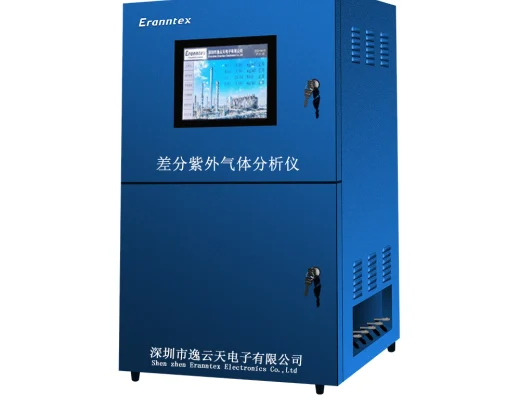
Sensing principle also matters for H₂S inside a gas line. Continuous exposure to high H₂S concentrations shortens the life of an electrochemical sensor, so for that duty the Eranntex technical team recommends differential UV analysis. Where a project keeps electrochemical sensing, the measurement can run at intervals instead. For one gas-field desulfurization line specified at up to 5,000 ppm H₂S, the team set it to one minute every four hours. If you specify a line measurement, give the expected H₂S concentration and how often a reading is needed. Together these decide the sensing principle and the measurement cycle.

Fixed detectors: decide the location before combining gases

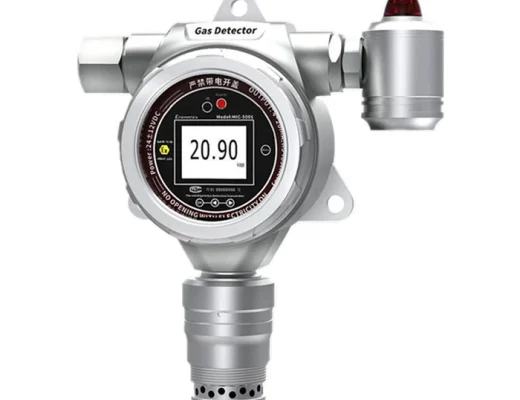
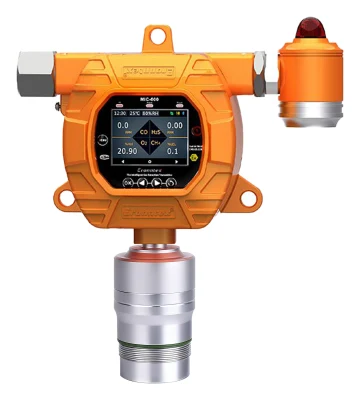
Where a fixed detector is mounted depends on the likely release sources, ventilation, and how each gas moves at that location. Gas density alone does not settle it. The GTYQ-MIC-600 can carry one to six gases in one enclosure, but a multi-gas unit only makes sense where all of those gases can reach the same mounting point. Methane is lighter than air and H₂S is heavier. Where the hazard assessment expects methane to collect high and H₂S near the floor or a drain, separate detectors at the two heights cover both. The MIC-600's standard outputs are RS485 Modbus RTU and three-wire 4–20 mA, with HART 5 optional, so the specification should name the receiving controller or DCS and the signal it expects.

Process samples: the sample path comes first

Measuring gas from inside a line or vessel is a sample-handling problem before it is a sensor problem. Water that condenses in the sample path can absorb part of the gas being measured, and liquids or dirt carried with the sample can damage the analyzer. Choose the conditioning stages from what the stream actually contains.

Conceptual oil and gas process area: a worker wearing a personal gas monitor on the chest, a fixed gas detector on a post beside a process vessel, and a sample line running from the vessel to an analyzer cabinet.
The worker's monitor and the fixed detector measure the surrounding air. Gas inside the vessel reaches the analyzer only through the sample line and its conditioning stages. Conceptual scene; equipment shapes and positions are illustrative, not an installation design.

Sour gas. H₂S dissolves in condensed water, so a sample line where water condenses can lower the reading before the gas reaches the analyzer. At the outlet of a shale-gas desulfurization skid, where the treated gas had to stay below 50 ppm, Eranntex paired a 0–50 ppm differential UV analyzer (DOAS-3000) with an electrically heat-traced sample line rather than condensing the moisture out.

Associated gas at the wellhead. Associated gas can carry oil and moisture into the sample path. For on-site CO₂ monitoring at the wellheads of a CO₂-flood oilfield, the Eranntex technical team fitted the inlet with an oil-gas separator with a manual drain, an additional high-humidity filter and a waterproof breathable membrane, which keep liquid away from the infrared sensor.

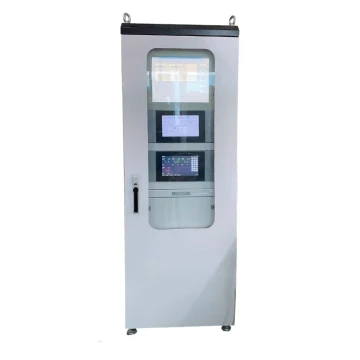
Hot, humid or dusty samples. The TH-2000-C is documented for emissions and flue-gas monitoring, flue-gas desulfurization and denitrification, boiler exhaust and wastewater pipelines. A hydrocarbon or sour-gas process stream is not one of these applications, so its sample system is engineered as a project. For the documented applications, the TH-2000-C draws the sample by pump and conditions it before analysis, with cooling, moisture removal, filtration and drainage stages selected for the project. Its standard sample temperature is −40 to 600 °C, with configurations up to 1,300 °C optional. The −40 to 70 °C figure is the operating range of the cabinet, not of the sample. The standard sampling distance is 30–40 m, and an optional jet or vacuum pump extends it beyond 70 m. Where an outdoor sample line can freeze, it is specified with a heated line.

What to send with an oil and gas inquiry

  • Personal and remote testing: the tasks, the gases and ranges that must be measured at the same time, and whether air is drawn from a hatch, tank or manhole through a probe or line.
  • Fixed points: the layout, the gases at each point, and the controller or DCS with the signal it expects.
  • Process samples: the stream composition, including H₂S, liquid hydrocarbons and free water; the pressure and temperature; the route to the cabinet; whether the line can freeze; how often a reading is needed; and where the sample goes after measurement (vent, flare or return to the process).
  • Every project: the country, the hazardous-area classification (for example Zone 1, or Class I, Division 1) and the certificate scheme the site requires (for example ATEX or IECEx).

Certificate coverage and battery runtime depend on the model and configuration. Our sales engineers confirm both for the configuration you specify. The quotation checklist lists the details in full.

Gas detectors for oil and gas sites

Related guidance

ENGINEERING GUIDEHow to Define an Industrial Gas Leak Detection Project
Read guide
CHECKLIST & TOOLSGas Detector Quotation Preparation Checklist
View checklist

Common gas detection questions