Skip to content
Industrial gas detection for demanding environments
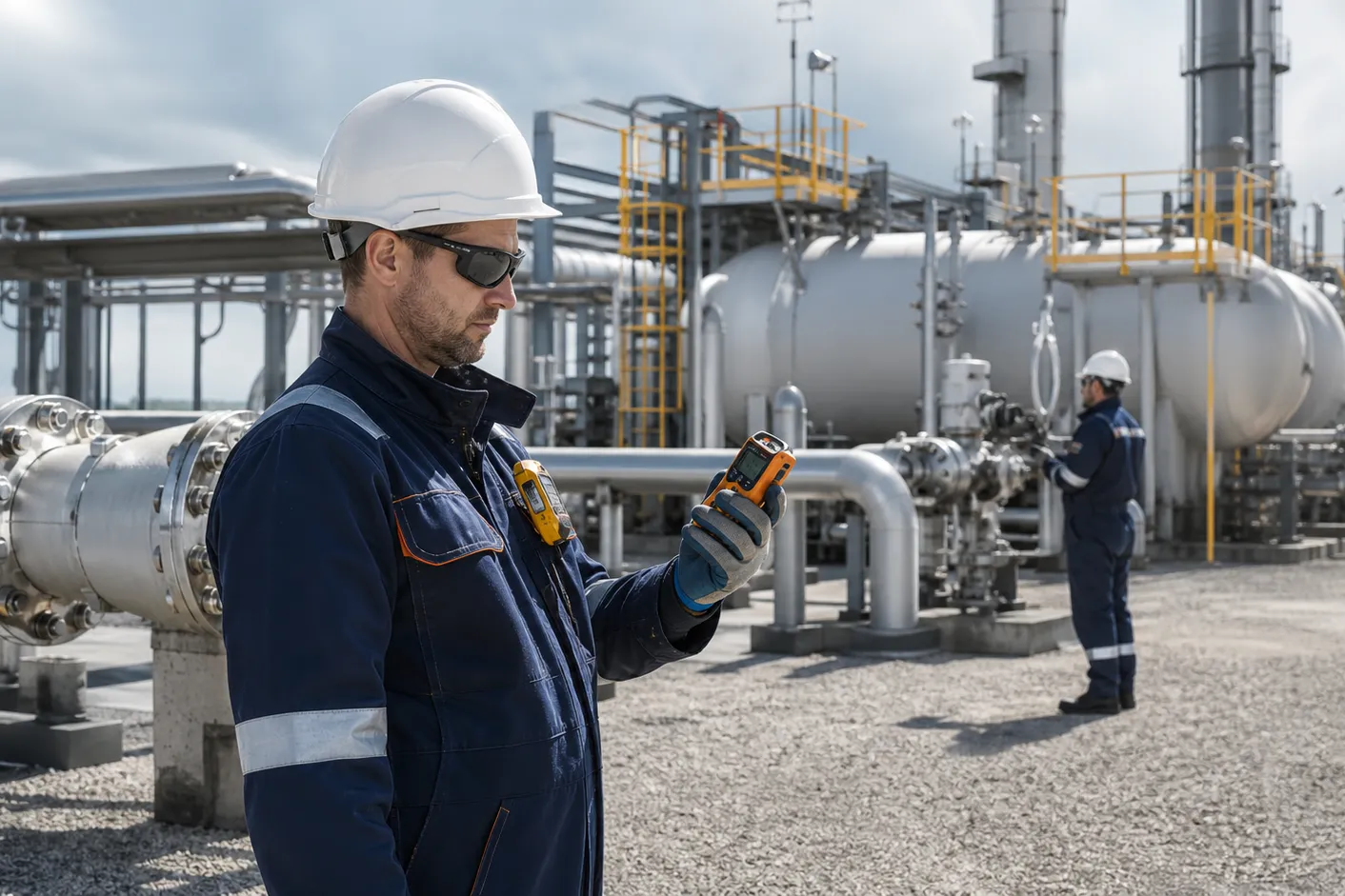
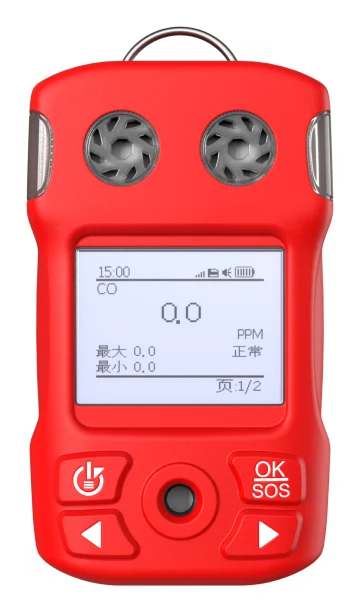
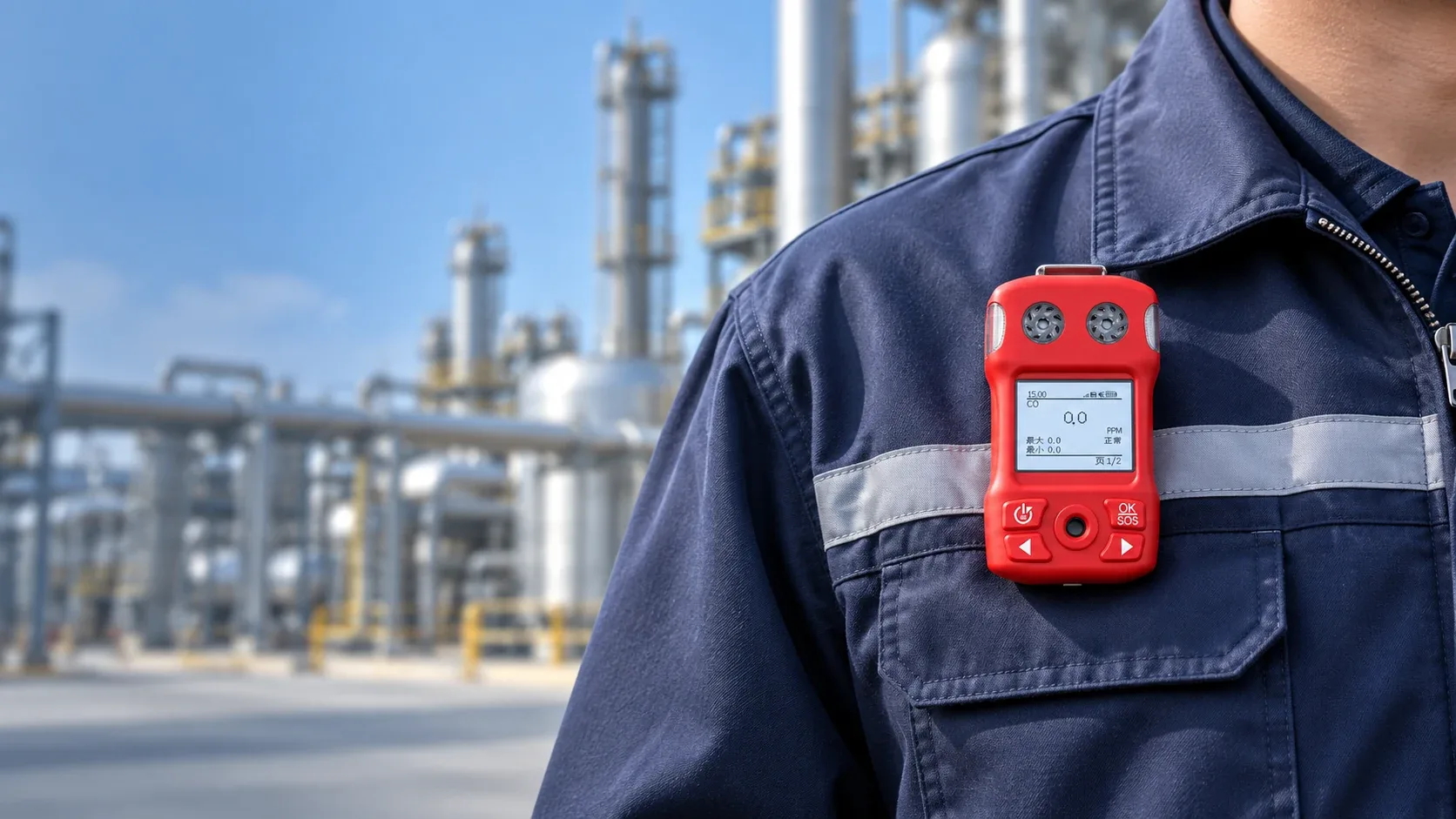
Illustrative personal gas monitoring scene with an Eranntex BTYQ-MS104K-S2 detector worn on a technician's upper chest.

Monitoring application

Personal Gas Monitoring and Portable Detector Selection

A personal gas monitor samples air close to the worker. Choosing one means matching the required gases, wearing position and daily checks to the work. Use this guide to compare sampling arrangements, recording needs and portable detectors, then prepare the equipment and documents your team will need.

Choose the gases and ranges for the work

The hazards and monitoring requirements at your site determine the gases and measuring ranges. Record the substances, tasks and operating conditions so the proposed configuration can be checked against them.

A single-gas monitor is an option when the assessed task calls for that measurement. If other gases or oxygen conditions also need monitoring, the equipment must cover them. Specify which measurements are needed at the same time; a list of supported gases does not describe the configuration in one instrument.

Where the work includes a permit-required confined space, equipment selection is part of a wider entry program. OSHA 29 CFR 1910.146 applies to covered US general-industry work. The confined-space application explains that task separately; choosing a detector does not complete an entry assessment.

Configuration inputs for the monitoring task
Specification inputRequirement to specify
Target gasesList the gases identified for the monitoring task.
Simultaneous measurementsState which gases must be monitored at the same time.
Measuring rangesSpecify the measuring range and unit for each required gas.

Confirm the proposed combination against the documented options and operating conditions before ordering.

Match the sampling point to the monitoring task

For personal monitoring, the sampling inlet needs access to air near the worker's breathing zone. Check the wearing arrangement with the clothing, harness and other equipment used on the job. The instrument instructions determine the approved position and accessories; covering the inlet can restrict gas access.

A remote hose draws air from its own inlet, so the sample can differ from air near the person holding the instrument. Identify which location needs monitoring before choosing the sampling arrangement. A pump supports remote sampling when required; it is not a requirement for every personal monitor.

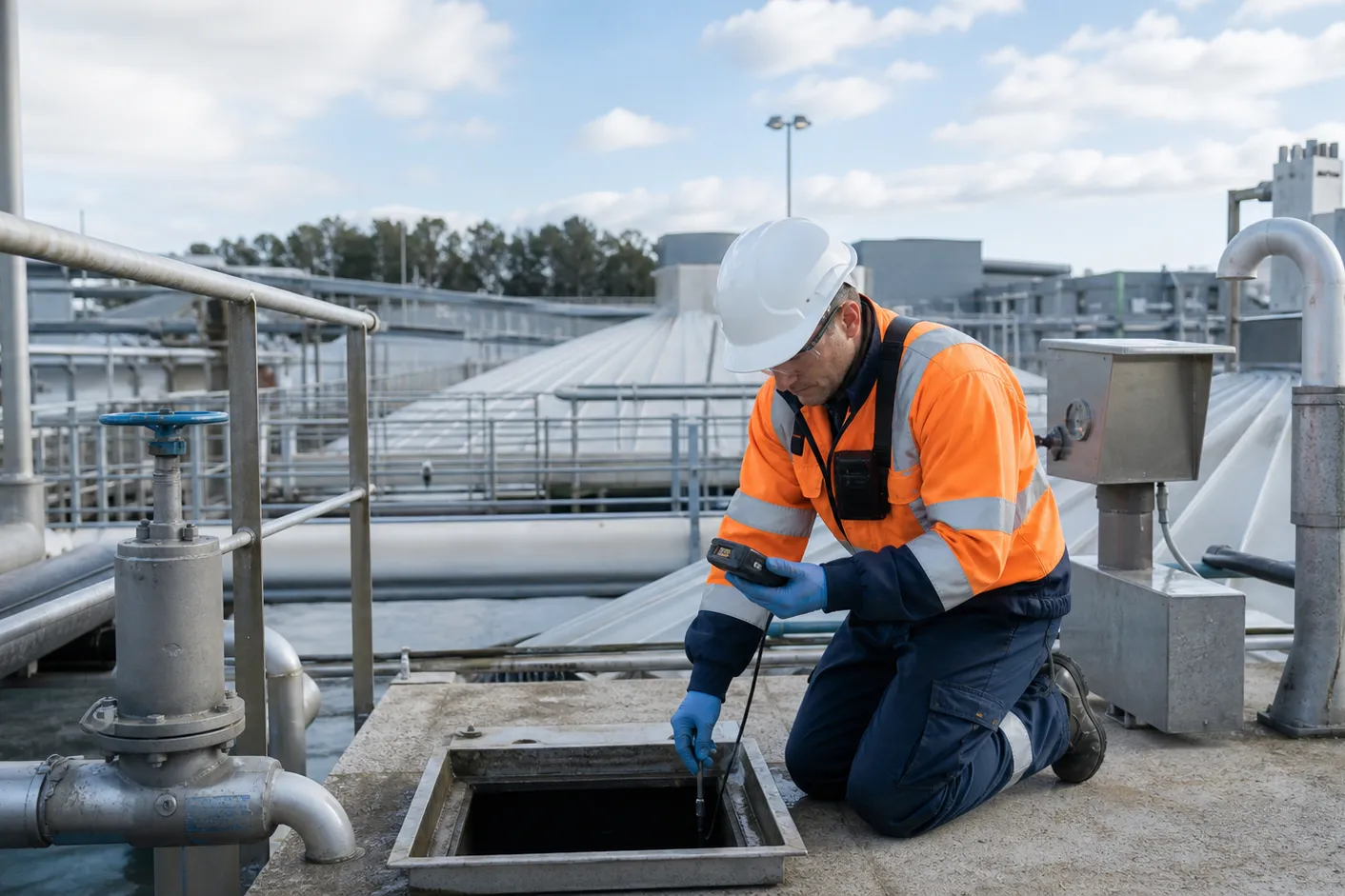
Tubing, filters and moisture can affect a remote sample and the time it takes to reach the instrument. NIOSH describes evaluating sample loss by comparing a known gas concentration measured directly and through the sampling line. That evaluation applies to the tested gas and path; use the confined-space guide for the related remote-testing task.

FIG. 02

Two sampling points, two monitoring tasks

Conceptual personal monitor with its inlet near the worker's upper chest.

Personal monitoring

Monitor inlet
Air enters near the worker's upper chest in this conceptual arrangement.

Keep gas access unobstructed in the wearing position specified by the instrument instructions.

Remote sampling

A generic remote sampling kit. Gas flows from the probe through the tubing and pump to the monitor inlet.
  1. ProbeAir enters at the remote sampling point.
  2. Sample line and pumpThe pump draws the sample through the connected tubing.
  3. Monitor inletThe instrument receives air from the remote location.
Conceptual arrangements, shown separately. Moving dots indicate remote flow direction only. The remote reading represents air at the probe inlet; it can differ from air near the worker. Follow the equipment instructions for the actual wearing position, mode and connections.

NIOSH: remote sampling evaluation

Know what pre-use checks confirm

A detector needs a working gas response and alarms before it is issued for use. OSHA's testing bulletin incorporates ISEA's recommendation for a bump test or calibration check before each day's use, following the manufacturer's instructions.

The bump test or function check does not provide a measure of the instrument's accuracy.

OSHA: Calibrating and Testing Direct-Reading Monitors, SHIB 11-26-2024Bump Test (or Function Check) · SHIB 11-26-2024 · Advisory guidance

A bump test checks gas access and alarm function. A calibration check compares the reading with a known test-gas concentration against the manufacturer's tolerance. Full calibration adjusts the response. Recording which check was performed makes the result useful to the next person responsible for the instrument.

The bulletin calls for full calibration after a failed bump test or calibration check. An instrument that fails full calibration should be removed from service. The specified test gas, regulator, tubing and adapter belong in the preparation for these checks.

Alarm recognition needs attention during equipment selection and training. Work clothing, hearing protection and site noise can affect how the wearer notices a warning. Assess the available signals in that context and use the site's procedure for the response.

Choose records that answer your team's questions

Decide what the team needs to learn from a record. To investigate an alarm, it may need the time, readings around the event and the work being performed. To review a shift, it may need a longer history. These questions lead to different checks on the recording interval, event detail and export format.

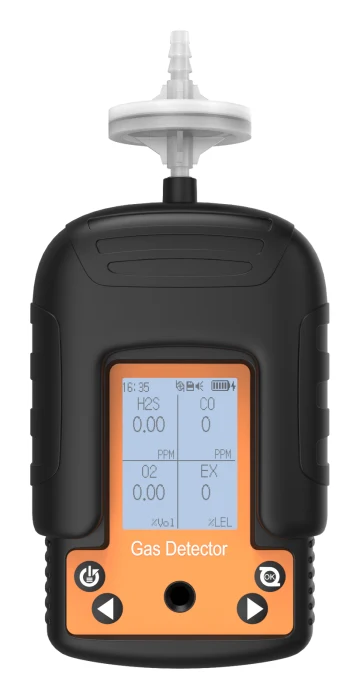
Before choosing an instrument, find out how it records, not just how much it stores. The MS104K-S2 is one example: its storage interval is configurable, records can be viewed, deleted and exported on the instrument, and it stops logging when storage is full rather than overwriting older records. That makes downloading and clearing records part of the shift routine. The alarm-record content and the export format are set for each project, so state in your enquiry which values the team needs and how each record must link to the instrument, the time and the work log.

Exposure-limit terms and the records to review
TermQuestion for the record review
TWAWhat is the time-weighted average over the applicable reference period?
STELDoes the short-term average exceed the applicable short-term limit?
CeilingDoes exposure exceed the ceiling limit under its stated measurement conditions?

Use the applicable limit and its specified averaging or measurement period. A short peak is not itself a STEL calculation. Check which values the instrument records and how it calculates them.

Compare the complete working kit

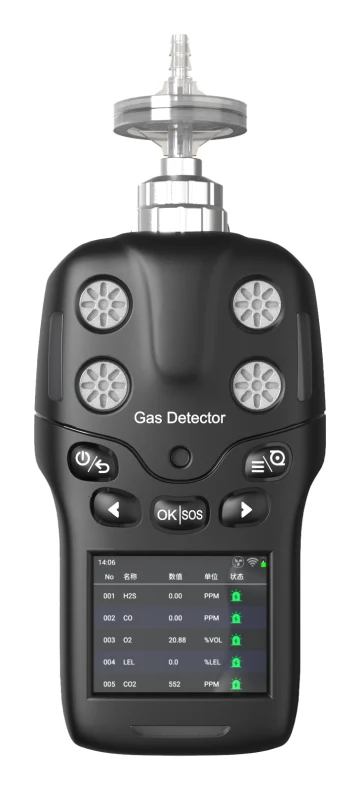
Compare the sampling arrangement across the candidate models. MS104K-S2 provides diffusion monitoring for one or two gases; MS104K-M combines diffusion with a standard external pump for remote checks. MS400-S has a built-in pump and can switch to diffusion. Compare how each complete kit fits the work, including any move between personal monitoring and remote sampling.

Then compare wearing and operating conditions. The table keeps documented weight and runtime conditions beside the values. Runtime figures for different modes or gas configurations are not a direct ranking. Match the expected time in use with the available charging period, and include the pump when remote sampling is part of the job.

The working kit also includes the supplies for daily checks and care. Identify the compatible test gas, regulator and calibration adapter, then any probe, tubing, filters or carrying accessories needed for the task. Distinguish supplied items from consumables that need replenishment. Check test-gas expiry and the maintenance instructions when planning that supply.

Read the ingress rating together with the operating limits and cleaning instructions. An IP value alone does not establish suitability for a particular washdown or condensation condition. At handover, keep the instrument identity, charging arrangements and required checks clear so the next shift can prepare the same working kit.

Compare the equipment with your working conditions
Selection questionBTYQ-MS104K-MBTYQ-MS400-SBTYQ-MS104K-S2
Gas configurationMatch the gases and ranges needed together.Standard: 1–4 gases; Expansion: Up to 6 gasesStandard: 1–4 gases; Expansion: Up to 6 gasesStandard: 1–2 gases
Sampling arrangementIdentify the inlet and accessories for each task.Diffusion or pump sampling; external pump supplied as standardBuilt-in pump; switchable to diffusionDiffusion
WeightCheck the wearing arrangement and carried accessories.Approx. 200 g — Diffusion operation; approximately 300 g with the supplied external pump.Approx. 430 gApprox. 230 g — Weight varies by configuration.
Documented runtimeRead each value with its operating conditions.Minimum 100 h — Diffusion operation without catalytic, infrared or PID sensors.Minimum 20 h — Pump operation.Minimum 48 h — With real-time 4G transmission and GPS/BeiDou positioning active.
Ingress ratingCheck environmental limits and cleaning instructions.IP66IP68IP68
Data storageCheck recording behavior separately from capacity.> 200,000 records> 1,000,000 records> 1,000,000 records

Compare runtime with the required configuration and operating mode. An ingress rating alone does not establish suitability for a particular washdown or condensation condition. Check the operating limits and cleaning instructions. Confirm the gases, ranges and accessories for the equipment being ordered.

Check the documents and prepare an equipment inquiry

Use the documents to check the equipment being offered. The operating manual should cover the proposed model, sampling mode, accessories and maintenance conditions. A test or calibration record should identify the instrument and state the relevant test conditions and results. That allows the receiving team to connect the record to the unit it receives.

Where hazardous-location approval is required, check the certificate record, covered model or configuration and stated conditions against the project requirement. A company credential or a document for another model does not establish that scope. Keep the applicable documents with the instrument's service history.

Send Eranntex the work description and the requirements already known. You can start without a model number or a completed specification. Our technical team can help compare the gas configuration, sampling accessories and documentation with those inputs. The quotation should identify the selected gases, ranges and agreed items, so the equipment and document package can be checked before ordering.

Key specification inputs

  • Country and state, facility, work tasks and areas visited.
  • Required gases, measuring ranges and simultaneous-monitoring needs, where known.
  • Personal monitoring and remote sampling tasks, including sampling points and distances.
  • Shift duration, environmental conditions and charging arrangements.
  • Alarm, data-recording and communication requirements.
  • Quantity, maintenance arrangements and required operating, test and approval documents.

Technical Team

Products for further evaluation

Related guidance

technical guideHigh H₂S Peak, Low TWA: What to Check Next
Read
CHECKLIST & TOOLSGas Detector Quotation Preparation Checklist
View checklist

Common application questions