LEL and %LEL in gas detection
LEL stands for lower explosive limit, the lowest concentration of a gas or vapor in air at which a flame can propagate. It is also called the lower flammable limit (LFL) [S18]. Detectors report LEL gas readings as a percentage of the reference gas's lower explosive limit, so 100 %LEL means that reference threshold has been reached [S2].
That scale lets one alarm logic cover different fuels. Methane has an LEL of 5% by volume and propane has an LEL of 2.1% [S13] [S3], yet on a detector calibrated for each gas, 10 %LEL carries the same meaning: one tenth of the way to an ignitable mixture. In US general industry, OSHA's rule for permit-required confined spaces includes flammable gas, vapor or mist above 10% of its LFL in the definition of a hazardous atmosphere [S1].
What does LEL mean? Lower explosive limit, LFL and UEL
A gas-air mixture can sustain a flame within its flammable range under the test conditions used to determine those limits. The lower explosive limit (LEL) is the bottom of that range and the upper explosive limit (UEL) is the top. US regulations and NIOSH data also use LFL (lower flammable limit) and UFL; OSHA guidelines state that LFL and LEL, as well as UFL and UEL, are used interchangeably for the same limits [S1] [S3] [S18].
| Concentration in air | What happens |
|---|---|
| Below the LEL / LFL | Too lean: not enough fuel to sustain a flame |
| Between LEL and UEL | Explosive range: an ignition source can start a fire or explosion |
| Above the UEL / UFL | Too rich: not enough oxygen to burn, until air mixes in |
A mixture above the UEL can become ignitable as soon as air mixes in. OSHA warns that a low combustible-gas reading above the UEL can hide this hazard and that introducing air can turn the space explosive [S2].
Mixtures below the LEL will not ignite at that moment, but a measurable reading of a few %LEL still shows that fuel is present and that a source may be feeding it [S18].

How to read %LEL on a gas detector, and what level is safe
A displayed %LEL reading is relative to the instrument's reference gas. The conversions below use methane in air at a published methane LEL of 5% by volume [S13]. Check the instrument's configured calibration gas before applying any conversion [S2].
| Reading | Methane example (LEL 5% vol) | How to interpret it |
|---|---|---|
| 0 %LEL | No concentration inferred from a zero display | The combustible-gas channel reads zero under current conditions, not that the air is verified clear. Low oxygen or sensor poisoning can hide fuel, and oxygen and toxic gases need separate sensors [S2]. |
| 3 %LEL | 0.15% vol · 1,500 ppm | A steady or rising 3 %LEL reading points to a leak or a pocket of gas. |
| 10 %LEL | 0.5% vol · 5,000 ppm | One tenth of the methane LEL. The applicable rule and work task govern how this level is treated [S1] [S17]. |
| 100 %LEL | 5% vol · 50,000 ppm | Reaches the published methane LEL on this reference basis [S13]. |
There is no universal safe %LEL reading. Thresholds depend on the jurisdiction, space classification and permit task:
- US general industry, permit-required confined spaces. OSHA 29 CFR 1910.146(b) includes flammable gas, vapor or mist at more than 10% of its LFL in the definition of a hazardous atmosphere. Oxygen and toxic exposures are assessed separately [S1].
- US shipyard employment, specified hot work. OSHA 29 CFR 1915.14(b)(1) requires the listed spaces, adjacent spaces or other dangerous atmospheres to be tested by a competent person and found below 10 %LEL for flammable vapors. Paragraph (a) requires certification by a Marine Chemist or Coast Guard authorized person for specified spaces [S17].
- China, petrochemical plant design. GB/T 50493-2019, clause 5.5.2, caps first-level and second-level combustible-gas alarm setpoints at 25 %LEL and 50 %LEL, respectively, for gas detection and alarm systems in new and expanded petrochemical projects [S16].
Where a detection system uses two alarm levels, the site sets each threshold and action under its own procedures and design requirements. On fixed systems, the higher alarm can also trigger ventilation, valve shutoff or interlock actions through the alarm controller. Eranntex configures detector alarm setpoints to match the values specified for the customer's site.
Lower explosive limit (LEL) and UEL chart for common gases
Published LEL values depend on the test method and conditions cited in the source standard, so figures for the same gas can differ slightly between regional standards. The values below are the published lower and upper limits in air by volume from the cited datasheets. Use them to understand fuel hazards and convert readings, not as alarm setpoints.
| Gas or vapor | LEL / LFL (% vol) | UEL / UFL (% vol) | 10 %LEL in ppm | Source |
|---|---|---|---|---|
| Methane (CH₄) | 5 | 15 | 5,000 | [S13] |
| Propane (C₃H₈) | 2.1 | 9.5 | 2,100 | [S3] |
| n-Butane (C₄H₁₀) | 1.6 | 8.4 | 1,600 | [S4] |
| n-Pentane (C₅H₁₂) | 1.5 | 7.8 | 1,500 | [S6] |
| n-Hexane (C₆H₁₄) | 1.1 | 7.5 | 1,100 | [S5] |
| Gasoline vapor (mixture) | 1.4 | 7.6 | 1,400 | [S19] |
| Hydrogen (H₂) | 4 | 75 | 4,000 | [S14] |
| Acetylene (HC≡CH) | 2.5 | 100 | 2,500 | [S21] |
| Ethanol (CH₃CH₂OH) | 3.3 | 19 | 3,300 | [S20] |
| Methanol (CH₃OH) | 6.0 | 36 | 6,000 | [S23] |
| Acetone ((CH₃)₂CO) | 2.5 | 12.8 | 2,500 | [S22] |
| Hydrogen sulfide (H₂S) | 4.0 | 44.0 | 4,000 | [S7] |
| Carbon monoxide (CO) | 12.5 | 74 | 12,500 | [S8] |
| Ethylene (C₂H₄) | 2.75 | 28.6 | 2,750 | [S25] |
| Ethylene oxide (C₂H₄O) | 3.0 | 100 | 3,000 | [S9] |
| Ammonia (NH₃) | 15 | 28 | 15,000 | [S10] |
The ppm column is calculated from the LEL in the same row. For example, 10% of ethylene's 2.75% vol reference is 0.275% vol, or 2,750 ppm [S25] (calculation). Ethylene and ethylene oxide are distinct chemicals with different limits. The gasoline row is a published reference for a vapor mixture; verify any specific fuel or solvent blend against the detector's configured target gas.
Natural gas and LPG. Methane is the largest component of natural gas, which also contains other hydrocarbons and nonhydrocarbon gases [S15]. LPG can contain propane, propylene, butanes and butylenes [S24]. Use the safety data sheet for the actual supply. OSHA recommends calibrating with the target gas where possible and consulting manufacturer guidance for other gases [S2].
Gases with no LEL, and gases a %LEL reading cannot protect against
Oxygen and carbon dioxide have no LEL. Neither is a fuel. NIOSH lists carbon dioxide as a nonflammable gas [S11]. Oxygen does not burn by itself, though elevated oxygen makes ordinary materials burn faster, creating its own fire hazard [S2]. Both gases are measured with dedicated sensors in % by volume or ppm, not on a %LEL scale, although catalytic-bead LEL sensors still rely on sufficient oxygen in air to detect combustible gas [S2].
Chlorine has no LEL. NIOSH lists chlorine as nonflammable and a strong oxidizer [S12]. A combustible gas sensor will not warn against it; chlorine requires a dedicated toxic-gas sensor.
Carbon monoxide and hydrogen sulfide are flammable, but their toxicity comes first. CO has an LEL of 12.5% by volume, so even 1 %LEL of CO is 1,250 ppm, above the NIOSH IDLH (immediately dangerous to life or health) value of 1,200 ppm [S8] (calculation). For H₂S, 1 %LEL is 400 ppm, four times its 100 ppm IDLH [S7] (calculation). For these toxic hazards, use dedicated toxic sensors that measure in ppm. OSHA notes that LEL values are tens of thousands of ppm and are not appropriate for assessing exposure to flammable toxic gases [S2].
Solvent exposure operates on a separate scale from %LEL. For acetone, the NIOSH recommended time-weighted average (TWA) exposure limit is 250 ppm, whereas 10 %LEL corresponds to 2,500 ppm on the table above [S22]. A %LEL channel set for explosion warning cannot evaluate time-weighted occupational exposure to toxic vapors [S2].
Converting between %LEL, % volume and ppm
The conversion uses only the gas's published LEL:
- % by volume = (%LEL ÷ 100) × LEL of the gas (% vol)
- ppm = % by volume × 10,000
| Reading | Methane (LEL 5% vol) | Propane (LEL 2.1% vol) | Hydrogen (LEL 4% vol) |
|---|---|---|---|
| 1 %LEL | 0.05% vol · 500 ppm | 0.021% vol · 210 ppm | 0.04% vol · 400 ppm |
| 10 %LEL | 0.5% vol · 5,000 ppm | 0.21% vol · 2,100 ppm | 0.4% vol · 4,000 ppm |
| 25 %LEL | 1.25% vol · 12,500 ppm | 0.525% vol · 5,250 ppm | 1% vol · 10,000 ppm |
| 100 %LEL | 5% vol · 50,000 ppm | 2.1% vol · 21,000 ppm | 4% vol · 40,000 ppm |
Sources for the LEL values: [S13] [S3] [S14]; table values by calculation.
This is arithmetic on gas properties. It tells you what a true 10 %LEL of propane contains. It does not tell you what a methane-calibrated detector will display when propane reaches it; that depends on the sensor's response to propane, covered below.
Why a %LEL reading can mislead: calibration gas, sensor limits and over-range
The reading is relative to the calibration gas
A combustible gas detector reports concentration as a percentage of the LEL of the gas it was calibrated on [S2]. Because fuels differ in heat of oxidation on a catalytic bead and in infrared absorption, a methane-calibrated detector exposed to propane, pentane or a solvent vapor outputs an unadjusted reading rather than that vapor's true %LEL. When direct calibration on the target gas is impractical, manufacturer correction factor charts or response curves adjust the displayed value toward the target vapor [S2]. OSHA's guidance is to calibrate with the gas actually monitored whenever possible, and otherwise apply the manufacturer's correction charts for the target gas [S2].
Eranntex calibrates the %LEL sensor on the reference gas the customer specifies, such as methane or pentane. Type evaluations of the BTYQ-MS400-S and BTYQ-MS104K-M %LEL measurement were carried out with methane [E5] [E6], and the GTYQ-MIC-500S-CH4-100 type evaluation tested six fixed catalytic units on methane at 20–24 °C with indication error within ±5 %FS and measured response times of 10–12 s [E9]. If your site hazard is a specific vapor or fuel other than methane, name it in the inquiry so the calibration gas and applicable response data match the job.
Fresh-air zeroing passes even on poisoned or oxygen-starved sensors
Many combustible gas sensors are catalytic and oxygen-dependent, which is why oxygen is measured before combustible gas when checking a confined space [S2]. In an oxygen-deficient or inerted atmosphere, such as a nitrogen-purged vessel or a vapor-filled tank, a catalytic sensor can read low or near zero while fuel is present [S2] [E7]. Silicone vapors and sulfur compounds, including H₂S, desensitize catalytic beads so they under-report gas, and high relative humidity (90% to 100%) causes hydroxylation that lowers sensitivity and impairs calibration [S2] [E7]. OSHA also notes that high concentrations of chlorinated hydrocarbons such as trichloroethylene or acid gases such as sulfur dioxide can depress combustible-gas readings [S2].
Zeroing an instrument in clean air only establishes a baseline; it does not test how the bead responds to real gas. Confirming live sensitivity requires applying known test gas in line with instrument calibration procedures [S2]. Separately, liquids with flash points above 90 °F, including diesel fuel and jet fuel, may generate too little vapor at ambient temperatures for standard combustible gas sensors, making a photoionization detector (PID) more appropriate [S2].
Over-range: above 100 %LEL and above the UEL
Oxygen deficiency causes catalytic sensors to under-read, and OSHA notes that in unusual circumstances gas concentrations above the UEL can produce a misleadingly low reading indicating a noncombustible atmosphere [S2]. A reading that drops after an over-range alarm can mean the gas has passed the UEL rather than cleared; confirm latching-alarm and recovery behavior in the instrument manual.
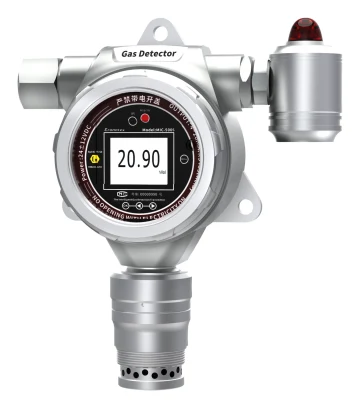
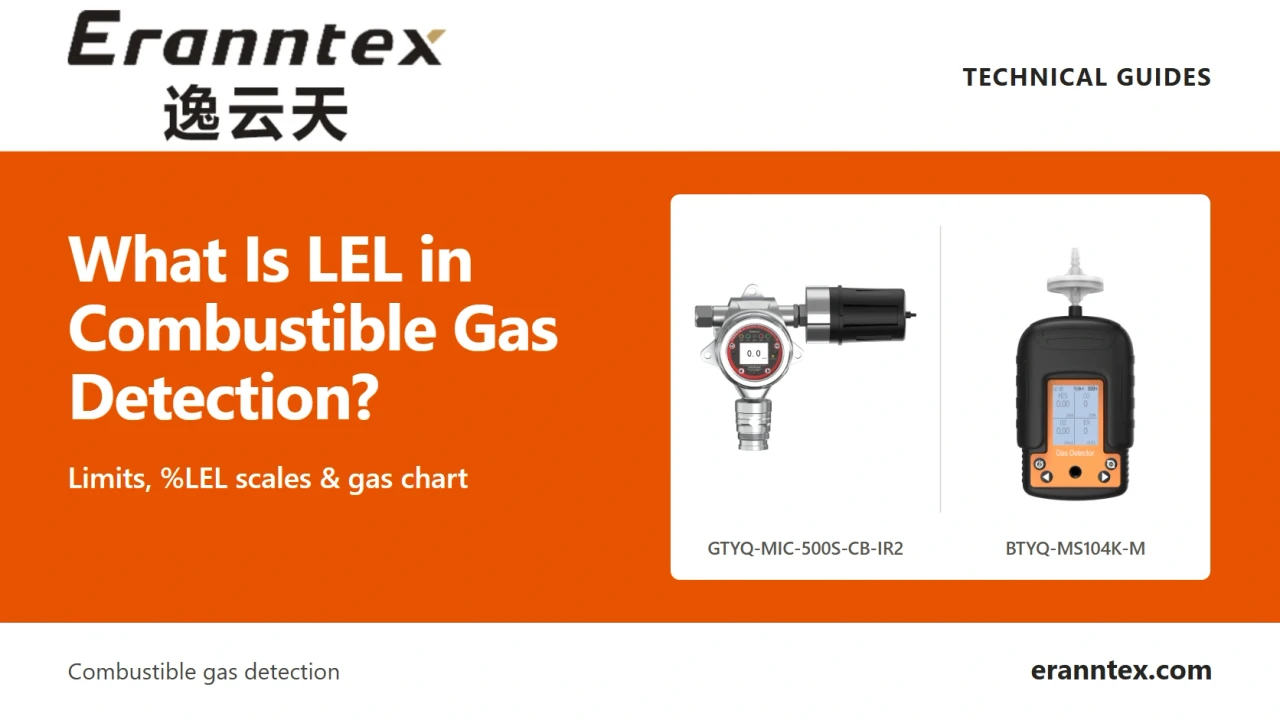
Infrared combustible sensors detect hydrocarbon gases without oxygen and avoid catalyst poisoning, though they cannot detect hydrogen [E7]. Where high concentrations above 100 %LEL must be quantified, check both the sensing principle and the full measuring span. Eranntex's fixed MIC-500S-CB-IR2 dual-beam infrared combustible gas detector covers 0–100 %LEL (1 %LEL resolution), 0–5 % vol (0.01 % vol resolution) and 0–10,000 ppm (50 ppm resolution) with a T90 response time of 4 s or less, recovery time of 5 s or less, typical accuracy of ±3% FS and an operating range of -40 °C to 70 °C [E1]. Portable multi-gas models MS104K-M, MS400-S and MS600-S also offer a 0–100 % vol combustible gas option alongside 0–100 %LEL [E2] [E3] [E4]. The sensing principle and measuring range for each portable configuration are confirmed per order.
Field examples from Eranntex combustible-gas deployments
Two deployments from Eranntex engineering records show how sensor physics and gas paths reshape %LEL hardware selection in the field.
Underground valve pits (0–20 % vol TDLAS methane and dead-volume removal). Wet, flood-prone valve-pit shafts trap high humidity and oxygen-depleted methane pockets where standard 0–100 %LEL catalytic heads drift or stall. To span the 5%–15 % vol flammable range and concentrations above it [S13], a configurable MIC-600 telemetry node was built with a tunable diode laser absorption spectroscopy (TDLAS) methane channel covering 0–20 % vol (0.01 % vol resolution). Inspection of the four-slot manifold showed that leaving one slot open created a stagnant gas pocket that slowed response, so technicians filled the unused cavity with a blank placeholder and sealed optical windows and cable glands for damp shafts. Telemetry reported on a 24-hour heartbeat that steps up to 1-minute uploads on alarm, and the nodes passed field-bracket and wireless checks for delivery.
Unpowered points on vessels (periodic low-power infrared %LEL). These points needed four-gas coverage (0–100 %LEL at 0.1 %LEL resolution, O₂, CO, and H₂S) for over a year without battery swaps, so they could not sustain heated catalytic heads or continuous radio transmissions, which would drain a 50 Ah pack within two to three months. Shifting the combustible channel to a low-power infrared 0–100 %LEL sensor paired with low-power electrochemical cells on a sealed splash-resistant MIC-600 node let the detector sample on a 5-minute periodic cycle (1 minute active per interval). Alarms route over LoRa to externally powered MIC2000 and MIC3000 controllers without laying power cables, and the configured systems were delivered for shipboard service.
Choosing equipment for combustible gas monitoring
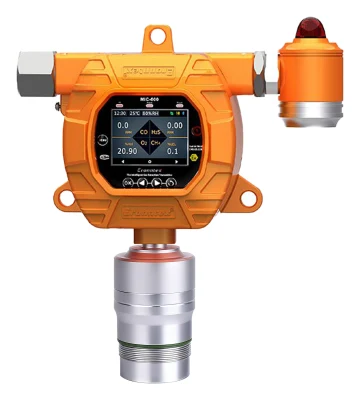
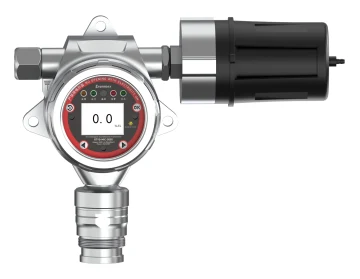
Matching a unit to a site depends on oxygen presence, catalyst poisons, hydrogen presence, fuel flash point and required toxic or PID channels rather than a single LEL span. For continuous fixed monitoring, explore fixed combustible gas detectors: the MIC-500S-CB-IR2 covers hydrocarbons in inerted or sour air with RS485 Modbus RTU and 4–20 mA as standard (optional HART 5/7) [E1]. Where non-infrared catalytic or dedicated H₂ monitoring is needed, fixed MIC-500S builds and portable platforms cover 0–100 %LEL alongside 0–100 % vol and ppm H₂ options [E2] [E3] [E4] [E9].
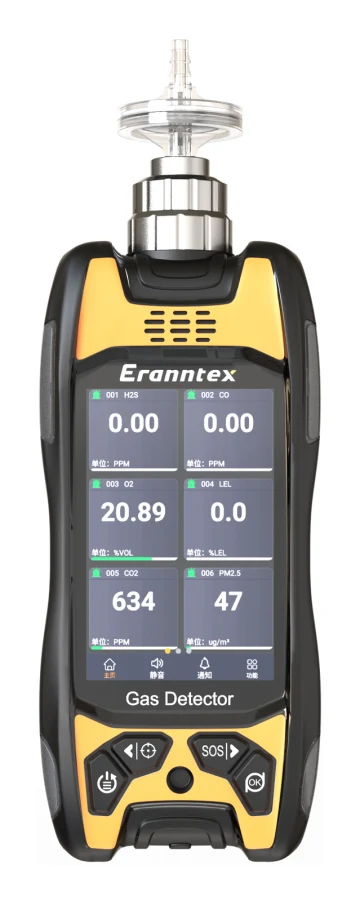
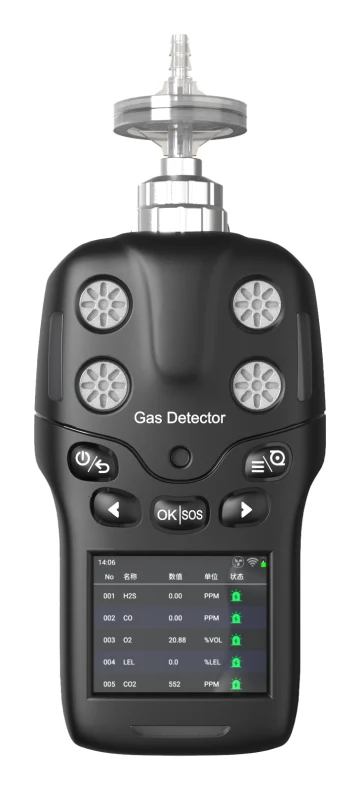
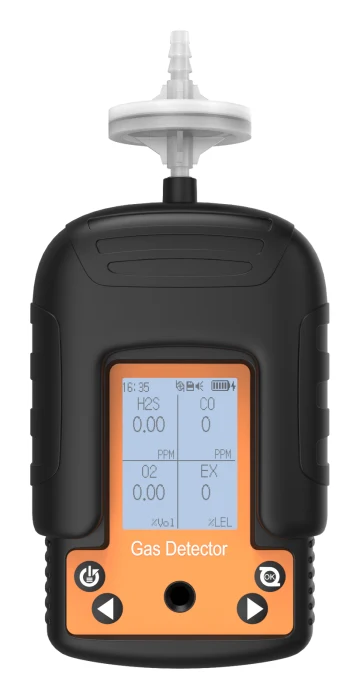
For pre-entry checks and leak tracing, portable LEL detectors match channel capacity to sampling needs: MS104K-M (diffusion with external pump supplied, -20 °C to 55 °C) and MS400-S (built-in switchable pump, -20 °C to 55 °C) support 1–4 gases standard and expand up to 6 gases, while MS600-S (built-in pump, -10 °C to 55 °C) supports 1–7 gases standard with 8–9 gas expansion [E2] [E3] [E4]. When a portable build also needs low-ppm solvent or heavy-fuel coverage (>90 °F flash point [S2]) alongside LEL, choose MS400-S or MS600-S because on MS104K-M the PID sensor shares its single slot with EX, CO₂ or IR [E8]. System alarm logic and controller integration are covered in combustible gas leak detection.
A quotation starts from five details: the target gas or vapor, the calibration reference gas, expected concentration and oxygen conditions, required toxic or PID channels, and destination hazardous-area certifications and signal outputs. Eranntex sales engineers confirm the exact sensor principle and build from those inputs. Free Quote · buyers are welcome to visit the factory in Shenzhen.
Frequently asked questions
References
| ID | Source & Scope |
|---|---|
| S1 | US OSHA, 29 CFR 1910.146 Permit-required confined spaces, §1910.146(b) definition of "hazardous atmosphere", item (1). US federal regulation. |
| S2 | US OSHA Technical Manual, Section II, Chapter 3 (direct-reading instruments), Section C "Explosibility (combustible gas) Sensors" (oxygen dependence, UEL behavior, Special Considerations on silicone, sulfur compounds, and 90%–100% relative humidity hydroxylation); page updated 2014-02-11. US agency guidance, not a regulation. |
| S3 | NIOSH Pocket Guide to Chemical Hazards: Propane. |
| S4 | NIOSH Pocket Guide: n-Butane. |
| S5 | NIOSH Pocket Guide: n-Hexane. |
| S6 | NIOSH Pocket Guide: n-Pentane. |
| S7 | NIOSH Pocket Guide: Hydrogen sulfide. |
| S8 | NIOSH Pocket Guide: Carbon monoxide. |
| S9 | NIOSH Pocket Guide: Ethylene oxide. |
| S10 | NIOSH Pocket Guide: Ammonia. |
| S11 | NIOSH Pocket Guide: Carbon dioxide. |
| S12 | NIOSH Pocket Guide: Chlorine. |
| S13 | NOAA CAMEO Chemicals: Methane datasheet. |
| S14 | NOAA CAMEO Chemicals: Hydrogen datasheet. |
| S15 | U.S. Energy Information Administration: Natural gas explained (composition). |
| S16 | GB/T 50493-2019 石油化工可燃气体和有毒气体检测报警设计标准 (design standard for combustible and toxic gas detection and alarm systems in the petrochemical industry; title translated), clause 5.5.2 items 1 and 2 (alarm set values) and clause 1.0.2 (scope). Recommended national standard of China, issued by the Ministry of Housing and Urban-Rural Development, Announcement No. 257 of 2019, in force 2020-01-01. |
| S17 | US OSHA, 29 CFR 1915.14 Hot work (Shipyard Employment), §1915.14(a) Marine Chemist certification and §1915.14(b)(1) testing by a competent person (below 10 percent of the LEL). US federal regulation. |
| S18 | US OSHA, 29 CFR 1915 Subpart B, Appendix A (Compliance assistance guidelines for confined and enclosed spaces), §1915.11(b) LEL/LFL and UEL/UFL interchangeability and §1915.12(b)(3) measurable vapors below 10 percent LEL. US agency guidance, non-mandatory. |
| S19 | NIOSH Pocket Guide: Gasoline. |
| S20 | NIOSH Pocket Guide: Ethyl alcohol (Ethanol). |
| S21 | NIOSH Pocket Guide: Acetylene. |
| S22 | NIOSH Pocket Guide: Acetone. |
| S23 | NIOSH Pocket Guide: Methyl alcohol (Methanol). |
| S24 | NIOSH Pocket Guide: L.P.G. |
| S25 | NOAA CAMEO Chemicals: Ethylene (CAS 74-85-1), Physical Properties, paired LEL and UEL values attributed to USCG (1999). |
| E1 | Eranntex GTYQ-MIC-500S-CB-IR2 product page, technical specifications and supported gas configurations. |
| E2 | Eranntex MS400-S product page, standard/expanded gas counts and supported H₂ ranges. |
| E3 | Eranntex MS600-S product page, standard/expanded gas counts and supported H₂ ranges. |
| E4 | Eranntex MS104K-M product page, standard/expanded gas counts and supported H₂ ranges. |
| E5 | Type-evaluation report HYQ202538576, Guangdong Institute of Metrology, 2026-01-26: BTYQ-MS400-S, methane 0–100 %LEL (PDF, Chinese). |
| E6 | Type-evaluation report F24-164-JJ: BTYQ-MS104K-M, methane 0–100 %LEL (PDF, Chinese). |
| E7 | Eranntex, Gas Detection for Oil & Gas Operations, section "Sour gas and high concentrations". |
| E8 | Eranntex, VOC Sensors & PID Detectors for VOC Gas Monitoring, MS104K-M shared sensor position and PID configurations. |
| E9 | Eranntex GTYQ-MIC-500S product page, supported gas configurations (including H₂) and Methane Type-Evaluation Report HYQ202638541 for CPA 2026C743-44. |