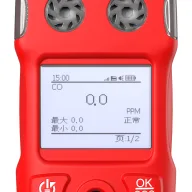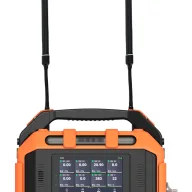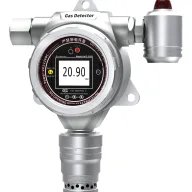
VOCs are organic chemicals that evaporate readily at room temperature, such as solvents, fuels and many process chemicals. We can measure each of the common VOCs below. What they do to people differs, and the workplace limit shows how low a concentration the detector needs to read.
- Benzene
- Affects the blood, bone marrow and nervous system, and irritates the eyes, skin and airways; carcinogenic to humans. OSHA limit: 1 ppm over 8 hours.
- Toluene
- Irritates the eyes, skin and airways; affects the nervous system, liver and kidneys. OSHA limit: 200 ppm over 8 hours.
- Xylene
- Irritates the eyes, skin and airways; affects the nervous system, digestive tract, blood, liver and kidneys. OSHA limit: 100 ppm over 8 hours.
- Ethylbenzene
- Irritates the eyes, skin and airways; affects the nervous system. OSHA limit: 100 ppm over 8 hours.
- Styrene
- Irritates the eyes, skin and airways; affects the nervous system, liver and reproductive system. OSHA limit: 100 ppm over 8 hours.
- n-Hexane
- Irritates the eyes, skin and airways; affects the central and peripheral nervous system. OSHA limit: 500 ppm over 8 hours.
- Acetone
- Irritates the eyes, skin and airways; affects the nervous system. OSHA limit: 1,000 ppm over 8 hours.
- Methyl ethyl ketone (MEK)
- Irritates the eyes, skin and airways; affects the nervous system. OSHA limit: 200 ppm over 8 hours.
- Ethyl acetate
- Irritates the eyes, skin and airways. OSHA limit: 400 ppm over 8 hours.
- Isopropyl alcohol
- Irritates the eyes, skin and airways. OSHA limit: 400 ppm over 8 hours.
- Trichloroethylene
- Affects the nervous system, heart, liver and kidneys, and irritates the eyes, skin and airways; carcinogenic to humans. OSHA limit: 100 ppm over 8 hours.
Even at 10% of its lower explosive limit, each of these compounds is already about 2 to 1,200 times its OSHA 8-hour limit. A combustible gas detector set to alarm at 10% LEL stays silent while people are overexposed, so protecting health takes a ppm-range VOC reading.