Matching a VOC detector to the gas stream
A standard 10.6 eV photoionization detector (PID) can sit beside a process leak, hold a steady low number, and still read 40% or more below the actual vapor in the air when methane quenches the lamp or when the reading uses an isobutylene calibration without a compound correction factor. [S8] Choosing a volatile organic compound (VOC) detector comes down to matching the sensor principle, UV lamp energy, and sample path to what is in the stream. Low-ppm exposure checks and non-methane leaks call for a PID, methane-referenced leak surveys call for a flame ionization detector (FID), and explosion alarms call for a catalytic bead or infrared channel. [S2] [S3] [S10]
Measuring ranges, sensor options, and workplace exposure limits across all 14 Eranntex VOC-capable models are listed on VOC detectors and PID sensors [S7] and in the gas detection by target gas directory.
1. Matching the monitoring task and local regulation
Industrial VOC specifications fall into three distinct jobs: tracking worker exposure at low ppm, screening equipment leaks from hundreds of ppm up to 10,000 ppm, and preventing explosions in %LEL or %Vol. Because environmental smog rules and workplace safety laws define VOCs differently across regions, a chemical exemption in one rulebook does not remove a safety monitoring requirement on site.
In the United States, 40 CFR 51.100(s) drops acetone and methylene chloride from outdoor smog VOC inventories because of negligible photochemical reactivity. [S1] Both solvents carry binding workplace exposure limits and still require toxic monitoring. [S2] Fugitive leak programs work on a separate scale, checking total VOCs at elevated concentrations with pumped probes to trigger equipment repairs. [S3] [S9]
European and Asia-Pacific rules set different boundaries. The EU Industrial Emissions Directive (2010/75/EU) defines a VOC by vapor pressure (0.01 kPa or more at 293.15 K) for installations using organic solvents, while Directive 2004/42/EC regulates VOC content in paints, varnishes, and vehicle refinishing products. [S4] A separate amendment, Directive (EU) 2022/431, tightens binding workplace limits for named carcinogenic VOCs. [S5] Sites in Asia-Pacific follow local schedules such as Singapore workplace regulations [S6] or China's GBZ 2.1-2019 and GB 37822-2019 limits. [S7]
2. Choosing the sensing principle: PID, FID, infrared, and catalytic bead
Target concentration, methane presence, and oxygen availability determine which sensor fits the point. Trace toxic vapors, methane leak surveys, and inerted %LEL streams require different physics, so mixed-hazard plants often combine channels from the table below.
| Sensing Principle | Typical Measuring Scope | Detects Methane? | Requires Oxygen? | Field Limitations | Best-Fit Monitoring Task |
|---|---|---|---|---|---|
| Photoionization (PID) | 0–10 ppm up to 0–10,000 ppm standard (plus 0–200,000 ppm on MS104K-S2; 0–10 mg/m³ online); wider spans trade away accuracy [S7] | No at standard lamp energies [S8] | No [S8] | Suppressed by high methane; attenuated by high humidity; reads mixed plumes as one total; window and sample-train fouling [S7] [S8] | Low-ppm occupational exposure checks, solvent vapor tracing, targeted non-methane leak checks |
| Flame Ionization (FID) | Wide hydrocarbon screening spans covering low-ppm through leak-survey levels [S2] [S3] | Yes (responds strongly to methane and light alkanes) [S3] | Yes (hydrogen flame requires air) [S2] | Flame extinguishes in oxygen-depleted streams; requires hydrogen fuel supply; non-selective across hydrocarbon mixtures [S2] [S3] | Methane-referenced EPA Method 21 leak surveys in refineries and gas plants [S3] |
| Non-Dispersive Infrared (NDIR) | Combustible %LEL and %Vol hydrocarbon spans [S2] [S10] | Yes (light hydrocarbons) [S10] | No [S10] | Insensitive to low-ppm toxic exposure limits; cannot separate overlapping aromatic vapors [S2] | %LEL or %Vol monitoring in nitrogen-purged tanks and oxygen-free hydrocarbon streams [S10] |
| Catalytic Bead (Pellistor) | 0–100 %LEL [S10] | Yes [S10] | Yes [S2] [S10] | Blind to low-ppm toxic VOCs; poisoned by silicones, lead, and sulfur compounds; reads low without oxygen [S2] [S10] | General combustible-gas explosion alarms in ventilated air [S10] |

Where PID fits in EPA Method 21 leak surveys
For US EPA Method 21 leak detection and repair (LDAR), an FID is the standard instrument when leak limits reference methane or light alkanes, while a PID qualifies when the process stream contains ionizable VOCs. [S3] [S8] Method 21 accepts both principles if the pumped analyzer draws 0.10–3.0 L/min through a filtered probe tip and reaches 90% of final reading (t90) within 30 seconds. The unit must also hold calibration precision within 10%, keep response factors below 10 on each regulated chemical, and carry the hazardous-area certification required for the installation. [S3] Leak-repair numbers come from the governing air subpart on site, not Method 21 itself: NSPS Subpart VVa triggers repair at 500 ppm on valves and 2,000 ppm on light-liquid pumps, while NESHAP Subpart H defines a pump leak at 1,000 ppm with a 2,000 ppm repair trigger. [S9]
Keeping a %LEL channel beside a PID
Pair a catalytic bead or infrared %LEL/%Vol channel alongside a PID whenever flammable solvent or gas poses an explosion risk. Standard PIDs miss methane altogether, [S8] lose accuracy on ultra-high-concentration spans, [S7] and report toxicity values that do not translate into lower explosive limits. [S2] Where vessels or pipelines are nitrogen-purged or oxygen-depleted, specify an infrared combustible channel because a catalytic bead under-reads without oxygen. [S2] [S10]
3. UV lamp energy: chemical coverage and service life
A PID detects a chemical only when the lamp's photon energy equals or exceeds the compound's ionization potential (IP). [S7] [S8] Most instruments ship with a 10.6 eV lamp for general solvent screening. Lower-energy lamps are reserved for filtering out higher-IP background interferents, and 11.7 eV lamps are used strictly for hard-to-ionize chlorinated solvents. [S8]
| Industry UV Lamp Tier | Typical Coverage | Selectivity Benefit / Constraints | Typical Published Lamp Life |
|---|---|---|---|
| 10.6 eV (standard workhorse) | Aromatics (such as BTEX and styrene), common ketones and esters, trichloroethylene, and vinyl chloride [S2] [S8] | Ignores bulk air gases, water vapor, methane, and ethane; misses high-IP solvents [S8] | 1 to 3 years depending on lamp size and service [S8] |
| 9.5 / 9.8 eV (selective tiers) | Lower-IP aromatics and selected compounds below the lamp cutoff [S7] [S8] | Filters out higher-IP background solvents (such as ethyl acetate or isopropanol) that mask aromatics [S8] | ~1 year typical life listed for 9.8 eV lamps [S8] |
| 11.7 eV (specialty high-energy) | Hard-to-ionize compounds including methylene chloride and chloroform [S2] [S8] | Uses a moisture-sensitive window prone to yellowing and humidity attack [S8] | 1 to 2 months typical operating life (requires dry storage) [S8] |
Even a 10.6 eV lamp cannot detect methane, ethane, methanol, formaldehyde, methylene chloride, chloroform, carbon monoxide, or carbon dioxide. [S2] [S8] Where those compounds drive site risk, add dedicated infrared, electrochemical, or specialty sensors. [S2] [S7] On Eranntex PID detectors, lamp energy, calibration gas, and response factors are matched to your target gas list and governing national standard when specifying the order. [S7]
4. Four field conditions that pull PID readings low
A PID can output a stable number while substantially under-reporting vapor in the air if methane or water vapor absorbs UV light in the sensor cell, or if heavy vapors stick inside the sample line before reaching the detector. [S8] Four site factors pull readings low.
High-concentration methane quenching
Standard 10.6 eV PIDs show zero positive response to methane, yet high methane levels absorb UV photons in the chamber and pull target VOC readings down. Published manufacturer application data reports roughly a 20% drop at 1.5% methane (15,000 ppm) and a 40% drop at 3.0% methane (30,000 ppm). [S8] In landfills, biogas plants, or natural gas leaks, monitor methane safety separately on a %LEL or %Vol channel and rely on sample dilution or laboratory analysis where quantitative ppm VOC data is required. [S8]
High humidity in warm, damp air
Water vapor attenuates PID response in a similar pattern, with the same manufacturer data showing about a 20% drop at 15,000 ppm water vapor and 40% at 30,000 ppm. [S8] Match zero-air temperature and humidity to the measurement environment during field calibration, [S7] [S10] install hydrophobic inlet filters to keep liquid aerosols out, [S8] and use sample conditioning on continuous online systems.
Correction factors and mixed solvent plumes
Most PIDs are calibrated with isobutylene and convert raw readings for a known single compound using a correction factor (CF): [S7] [S8]
Leaving the correction factor out shifts readings either high or low depending on the solvent. At a 10 ppm isobutylene-calibrated display under a 10.6 eV lamp, actual benzene (CF ≈ 0.47) is about 4.7 ppm, so the raw display reads high. [S8] With heavier esters the error goes the other way: that same 10 ppm display corresponds to 26 ppm of butyl acetate (CF = 2.6) or 32 ppm of ethyl acetate (CF = 3.2), under-reporting exposure by two to three times. [S8] Because CFs vary with lamp condition, relative humidity, and concentrations above about 1,000 ppm (where direct calibration on the target gas is preferred), [S8] use the correction table supplied with your instrument. Where multiple solvents evaporate together, a PID reports a single combined TVOC reading instead of isolating individual vapors. [S7]
Lamp window fouling and sample tubing losses
Oil mist, dust, and heavy vapors coat the UV window over time and gradually drop sensitivity, making scheduled window cleaning and daily bump testing necessary. [S8] [S10] A bump test is a brief exposure to challenge gas that verifies gas reaches the sensor and alarms activate; it does not check calibration accuracy. [S10] On pumped units, contaminated inlet filters can also adsorb VOCs before they reach the chamber. [S8] Use short PTFE or FEP fluoropolymer lines, which EPA testing accepts for reactive-gas monitoring probes, in place of standard PVC or rubber tubing. [S11]
5. Three field VOC deployments and how they were configured
The three field deployments below come from Eranntex project records and show how flammable co-gases, statutory readout units, and heavy-vapor adsorption change detector builds and purge routines on site.
Example 1: Splitting channels across chemical work zones
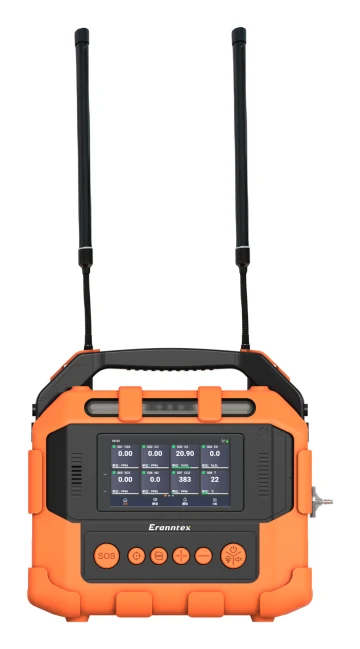
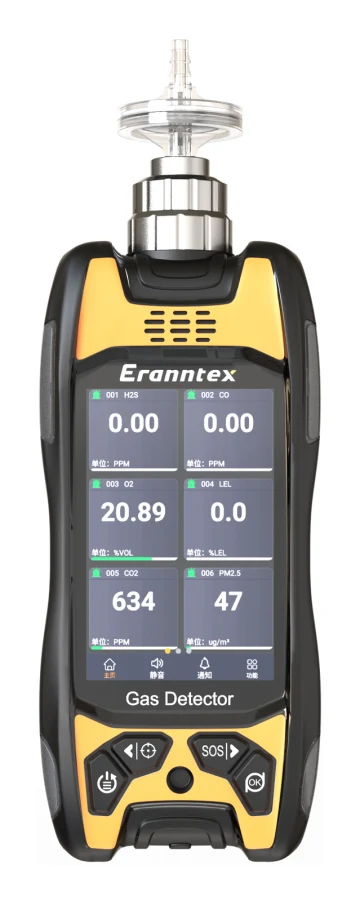
On a specialty chemical plant deployment with 4G telemetry, engineers avoided forcing identical sensor stacks onto every portable detector. Areas handling aromatic solvents alongside ammonia received a 0–100 ppm PID channel paired with a catalytic %LEL channel so flammable media including methanol (which a standard 10.6 eV PID misses [S8]) still triggered explosion alarms. Other units on the same project carried dedicated %LEL, CO, and H2S channels instead. Matching channels by area risk kept units tailored to the hazards present, a modular build approach supported on the MS600-S with optional wireless telemetry. [S7] [S12]
Example 2: Aligning VOC and criteria-pollutant readout units
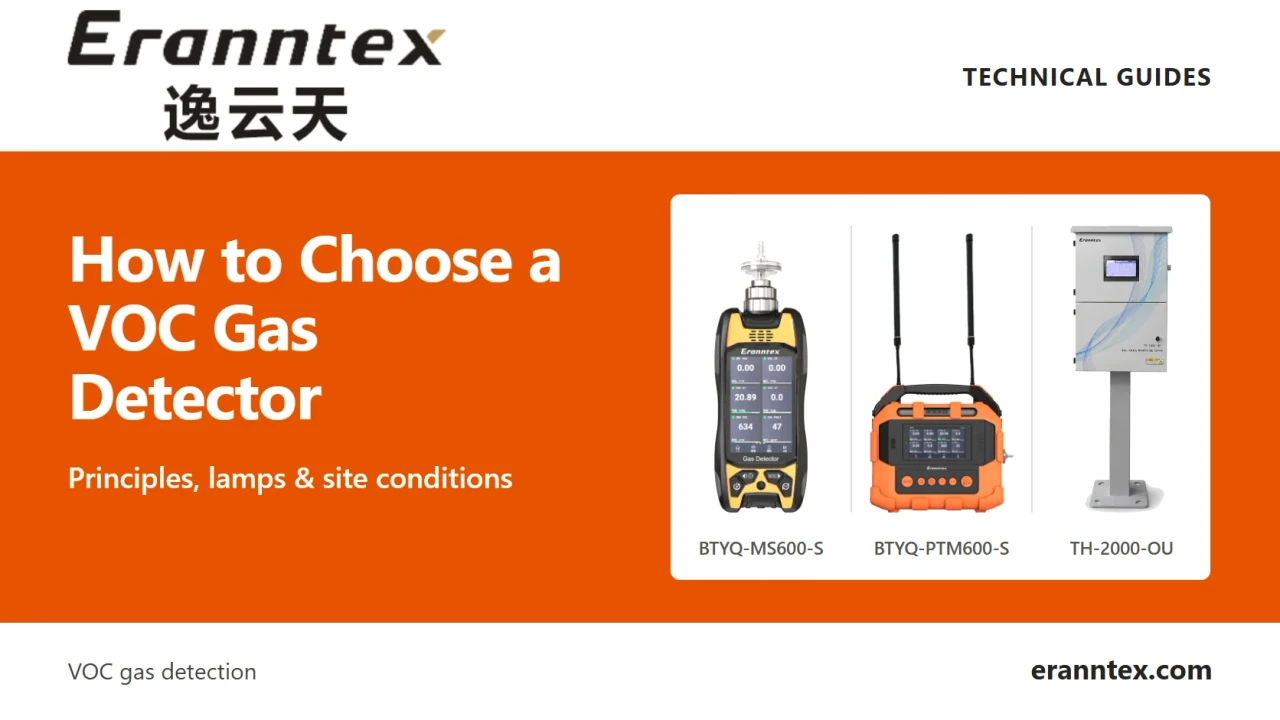
On a municipal environmental inspection rollout covering ambient VOCs alongside PM2.5, PM10, nitrogen oxides, ozone, carbon monoxide, and sulfur dioxide, crews divided the monitoring across dedicated PID portables displaying mass concentration (mg/m³) and multi-parameter particulate/gas analyzers. During acceptance training after delivery, the users asked for display units matching China's ambient standard GB 3095-2012, which expresses most regulated pollutants in µg/m³ and carbon monoxide in mg/m³, so the factory updated the display units on the returned instruments. In the current catalog, both the MS600-S and PTM600-S cover ppm VOC ranges down to 0.001 ppm resolution. [S7]
Example 3: Purging heavy white-oil vapor off a 200 °C annealing exhaust
On an aluminum-foil annealing line, plant staff needed exhaust VOC readings (mainly alcohols and esters baked off rolling white oil) to judge when each 15–20 day anneal cycle could finish. The exhaust left the stack at roughly 200 °C with no steam and very little dust. During an initial survey with a handheld PID, readings climbed as vapors rose, then lingered high long after returning to clean air because heavy oil vapor coated the sample line, chamber walls, and lamp window.
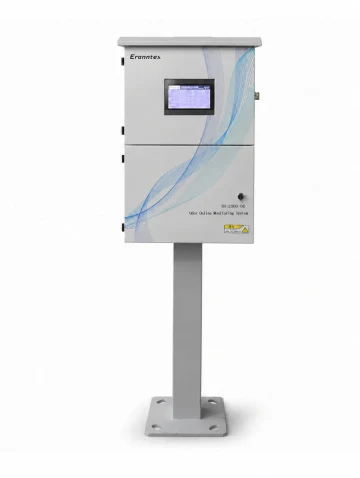
Because process sign-off needed only a few checks a day instead of continuous logging, engineers omitted the standard condenser and peristaltic drain pump from a TH-2000-series enclosure. They installed a fixed ceramic-substrate PID with PTFE tubing and PTFE filters, then set a 60-minute loop: 5 minutes of sampling, 54.5 minutes of clean-air purge, and a 0.5-minute pump stop. Factory tests confirmed repeatable readings and consistent return near zero after each purge cycle.
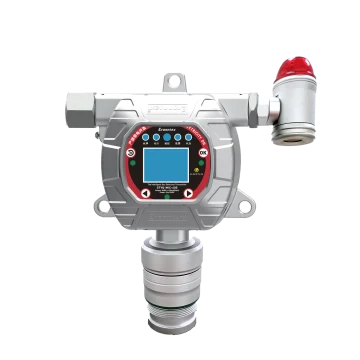
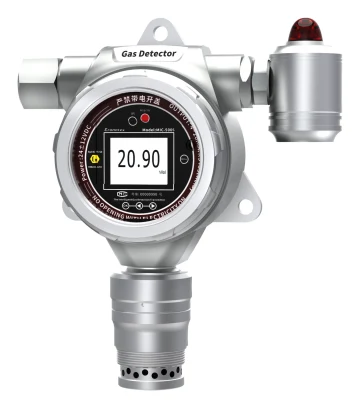
Commissioning turned up two piping details for high-temperature VOC purge paths. First, the purge inlet must draw ambient air rather than compressed plant air, because compressed-air pressure ruptured the PTFE filter during initial checks. Second, the purge intake belongs outdoors away from the stack, because the instrument room itself carried 15–20 ppm of background VOCs. The customer reported satisfactory results from the site trial unit. On current TH-2000-OU online systems paired with MIC-500S or MIC-600-CB transmitters (4–20 mA and RS485 standard, optional HART on MIC-600-CB, wireless options on MIC-500S), sample conditioning and purge arrangements are evaluated to order by our sales engineers. [S12]
6. Configuring an Eranntex VOC detector for your application
Eranntex integrates PID sensors across 14 portable, transportable, fixed, and online models. Standard catalog spans run from 0–10 ppm (down to 0.001 ppm resolution on selected builds) through 0–10,000 ppm for leak checks, alongside a 0–200,000 ppm specialty option on the MS104K-S2 (where wider range reduces accuracy) and 0–10 mg/m³ on the TH-2000-OU. [S7] When streams involve unfamiliar mixtures, high moisture, or custom spans, Eranntex engineers evaluate site data and arrange target-gas testing prior to build. Model matrices sit on VOC detectors and PID sensors, [S7] alongside category overviews for portable gas detectors, transportable gas detection systems, and fixed gas detectors.
Two practical checks help lock in a specification for leak detection, chemical manufacturing, and oil and gas installations:
- Explosion-protection approvals depend on model and sensor mix, so check the Certificates & documents tab on each product page to confirm which certificate covers a PID-equipped build in your jurisdiction.
- UV lamp excitation and motorized pumps draw more power than passive electrochemical cells; confirm shift runtime for your exact sensor and wireless setup, along with fixed relay, 4–20 mA, RS485, or HART output ratings, through our sales engineers.
Free Quote
Include these project details when requesting a portable, transportable, or fixed VOC configuration:
- Target vapors or solvent mixtures, expected concentration span, and leak-check threshold
- Presence of methane, nitrogen inerting, sample temperature, relative humidity, and dust or oil mist
- Governing workplace exposure limit or fugitive-leak regulation for the site
- Diffusion or pumped sampling, tubing material and length, co-monitored gases, and required transmitter outputs (4–20 mA, RS485, or optional HART)
Send your site parameters through the Eranntex Free Quote form or contact our sales engineers to confirm model compatibility, UV lamp energy, calibration gas, and sample conditioning. Visits to the Eranntex manufacturing facility in Shenzhen are welcome.
Frequently asked questions
Sources
| No. | Source | What it supports |
|---|---|---|
| S1 | US EPA 40 CFR 51.100(s): eCFR 40 CFR 51.100 | Photochemical reactivity VOC definition and exempt solvents |
| S2 | NIOSH & OSHA Chemical Hazards: NIOSH Pocket Guide Index, OSHA Technical Manual Section II Chapter 3 | Exposure limits (acetone, methylene chloride), PID/FID/IR/catalytic principles, and oxygen dependence |
| S3 | US EPA Method 21 (40 CFR Part 60, Appendix A-7): EPA Method 21 PDF | Accepted detectors, 0.10–3.0 L/min flow, probe and safety criteria, RF < 10, 10% precision, and t90 ≤ 30 s |
| S4 | EU Directives 2010/75/EU and 2004/42/EC: EUR-Lex 32010L0075, EUR-Lex 32004L0042 | EU VOC vapor-pressure threshold (2010/75/EU) and VOC content rules for coatings (2004/42/EC) |
| S5 | European Union Directive (EU) 2022/431: EUR-Lex 32022L0431 | Updated EU binding workplace limits for named carcinogens |
| S6 | Singapore Statutes Online: Workplace Safety and Health (General Provisions) Regulations | Asia-Pacific statutory workplace exposure schedule |
| S7 | Eranntex VOC Gas Page: VOC detectors and PID sensors | 14 VOC-capable models, 0–10 to 0–10,000 ppm and specialty spans, UV lamp tiers, GBZ/GB limits, and field zeroing |
| S8 | Honeywell / RAE Systems Technical Notes: TN-124 PID Lamp Characteristics and TN-106 A Guideline for PID Instrument Response (rev. 11/18) | Lamp life tiers, no-response compounds, methane and humidity quenching (~20% / ~40%), correction factors, and filter adsorption |
| S9 | US EPA Equipment Leak Rules (40 CFR Parts 60 & 63): § 60.482-2a, § 60.482-7a, § 63.163 | US federal leak definitions and repair thresholds for valves and light-liquid pumps |
| S10 | OSHA Safety and Health Information Bulletin: Calibrating and Testing Direct-Reading Monitors, SHIB 11-26-2024 and Honeywell / RAE Technical Note: TN-144 Handling LEL Sensor Poisons | Bump test scope, environmental calibration matching, and catalytic bead vs. infrared %LEL limits |
| S11 | US EPA Office of Research and Development (2022): Gaseous Pollutant Transport Efficiency by Tubing Material | Accepted fluoropolymer and glass probe tubing materials for reactive gases |
| S12 | Eranntex product pages: MS600-S, TH-2000-OU, MIC-500S, MIC-600-CB | Model-level wireless, remote-management, conditioning, and output options |